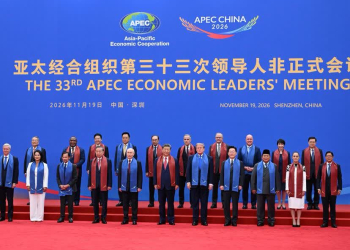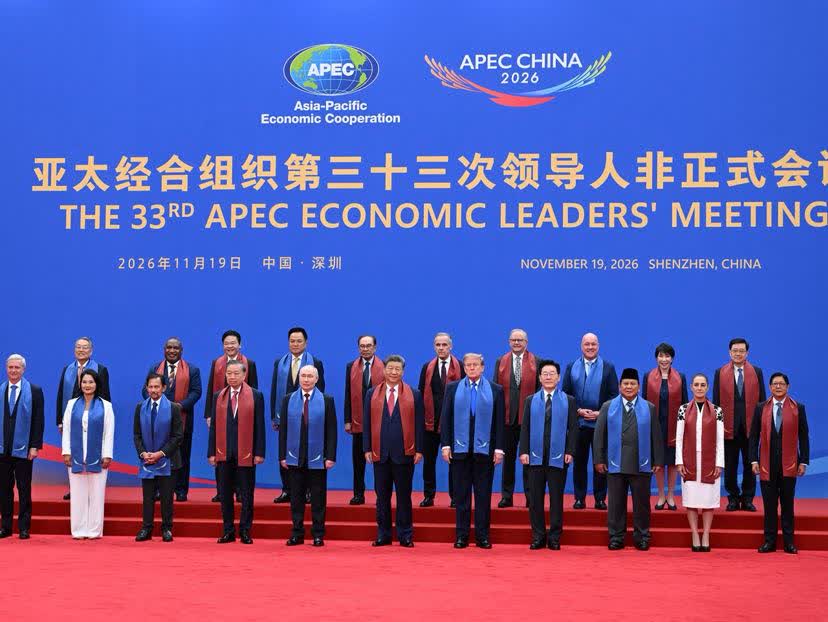

【格局新闻网专讯】2026年11月19日,亚太经合组织(APEC)第三十三次领导人非正式会议与会经济体领导人及代表在集体合影时佩戴了“同心合锦”系列丝绸长巾。这套配饰分为红色与蓝色两款,红色长巾采用广东顺德染整的香云纱,蓝色长巾则由江苏苏州上久楷织造宋锦,设计团队同时在作品中融入了粤绣与苏绣技艺。
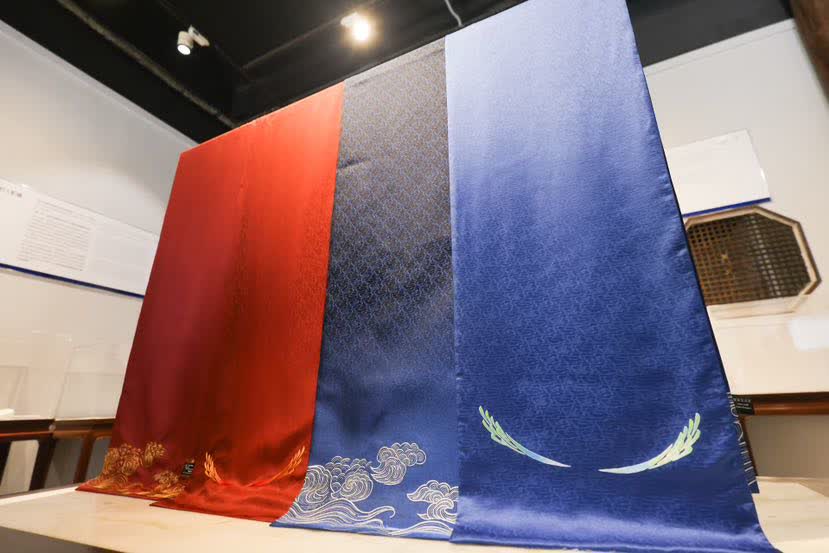
长巾图案取材于2026年APEC会议会标,底纹包含木棉、三角梅与祥云等元素。从工艺分工来看,围巾制作涉及跨地域协作:苏州上久楷负责宋锦织造并主导研发设计与交付,顺德香云纱染整技艺国家级代表性传承人黄田胜参与染整与品质把关,粤绣传承人阮贤娥与苏绣传承人邹英姿则分别在刺绣环节提供指导。据媒体披露,该项目累计投入原料约5000米,最终制成42条成品。
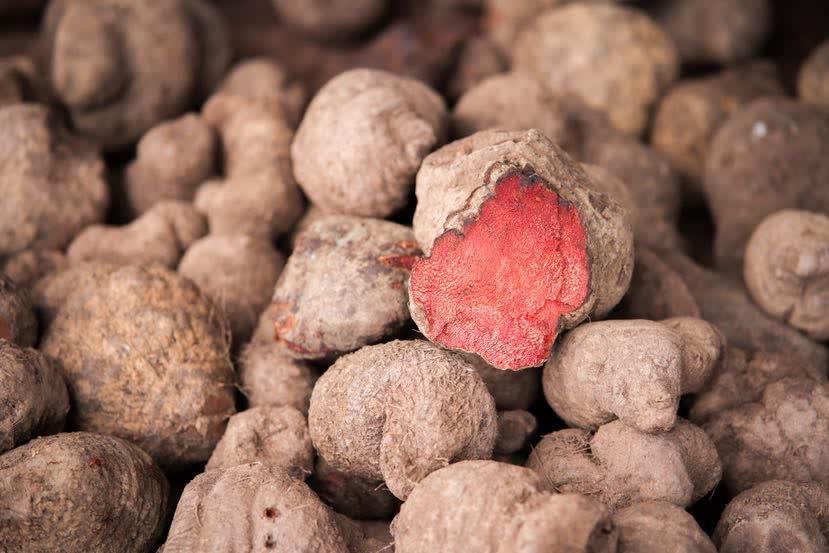
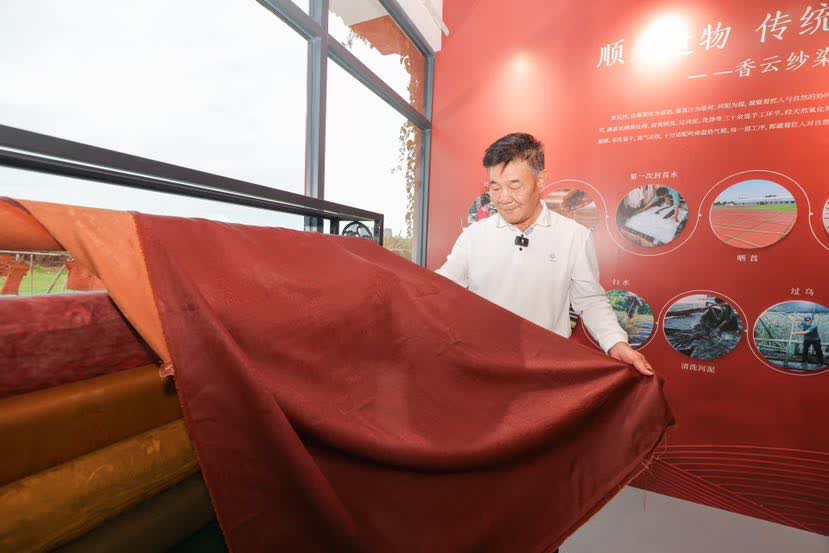
香云纱以桑蚕丝为底坯,经薯莨汁液浸染与河泥涂覆等工序加工而成。长巾呈现的红褐色调并非来自化学染剂,而是由顺德伦教晒莨场中薯莨汁液与河泥经多道手工染整及日晒干燥后形成。由于制作过程依赖自然日照、温湿度变化与手工耗时,单批产量与交期受到一定制约。
过去,由于缺乏统一量化指标,香云纱市场常面临品质判定依赖个人经验的问题。顺德伦教方面近年来出台了《香云纱品类与等级评定规范》团体标准,将色牢度、撕拉力等理化测试指标与传统感官评估结合,并于2026年4月落地首批“优等品”评定。公开数据显示,2025年顺德香云纱产能突破1000万米,伦教晒莨场面积超过1600亩,当地同时启用了集生产、研发、孵化与展贸于一体的全产业链园区。
在产品形态与设计端,顺德正通过“双创设计赋能计划”推动面料企业与设计师品牌对接,探索将传统面料用于现代剪裁与跨品类拼配。此次APEC配饰将香云纱与宋锦、粤绣、苏绣置于同一套织物体系中,展示了多地传统纺织与刺绣工艺在当代定制场景下的组合方式。
对顺德产区而言,国际多边场合的曝光带来了关注度,但如何在保持传统工艺特征的同时维持稳定交期、成本控制与日常市场接受度,仍是产业持续推进的现实课题。(本文图片均来自大公文汇)
Shunde Gambiered Silk at the APEC Photo Op: Red Scarves Dyed With Gambier Root and River Mud
On November 19, 2026, leaders and representatives attending the 33rd APEC Economic Leaders’ Meeting wore silk scarves from the “Tongxin Hejin” (“Harmony”) series during the group photo session. The set includes two versions: red scarves made with gambiered silk dyed and finished in Shunde, Guangdong, and blue scarves woven from Song brocade by Shangjiukai in Suzhou, Jiangsu, with Cantonese embroidery and Suzhou embroidery incorporated into the design.
The scarf patterns draw on the 2026 APEC emblem, with base motifs featuring kapok blossoms, bougainvillea, and auspicious clouds. Production involved cross-regional collaboration: Suzhou Shangjiukai handled Song brocade weaving as well as research, design, and delivery; Huang Tiansheng, a national-level representative inheritor of Shunde gambiered silk dyeing and finishing techniques, participated in dyeing and quality control; and embroidery inheritors Ruan Xian’e and Zou Yingzi provided guidance for the Cantonese and Suzhou embroidery elements respectively. According to media reports, roughly 5,000 meters of raw material went into the project, yielding 42 finished scarves.
Gambiered silk uses mulberry silk as its base fabric and is processed through immersion in gambier root juice and coating with river mud. In Lunjiang, Shunde, the fabric undergoes multiple rounds of manual dyeing, finishing, and sun-drying, typically resulting in a deep brown or dark black tone on one side and a reddish-brown hue on the other. Because production relies heavily on natural sunlight, air humidity, local river silt, and plant materials, weather fluctuations and manual processing time have constrained single-batch output.
Historically, quality assessment in the gambiered silk market often relied on individual experience due to a lack of unified quantitative benchmarks. In recent years, authorities in Lunjiang, Shunde introduced the group standard Specifications for Categorization and Grading of Gambiered Silk, combining physical and chemical testing indicators such as color fastness and tear strength with traditional sensory evaluation, and rolled out its first batch of “superior grade” designations in April 2026. Public figures indicate that Shunde’s gambiered silk production capacity surpassed 10 million meters in 2025, with Lunjiang sun-drying fields covering more than 1,600 mu and a full-industry-chain park integrating manufacturing, research and development, incubation, and exhibition and trade put into operation.
On product application and design, Shunde has promoted links between fabric enterprises and designer brands through its “Dual Innovation Design Empowerment Plan,” exploring modern tailoring and cross-category pairing. Placing gambiered silk alongside Song brocade, Cantonese embroidery, and Suzhou embroidery within one textile system illustrates how regional weaving and embroidery crafts can be combined in bespoke accessories. For the Shunde production cluster, visibility at a major international gathering raises awareness, while maintaining consistent lead times, cost control, and everyday market acceptance remains an ongoing task.